
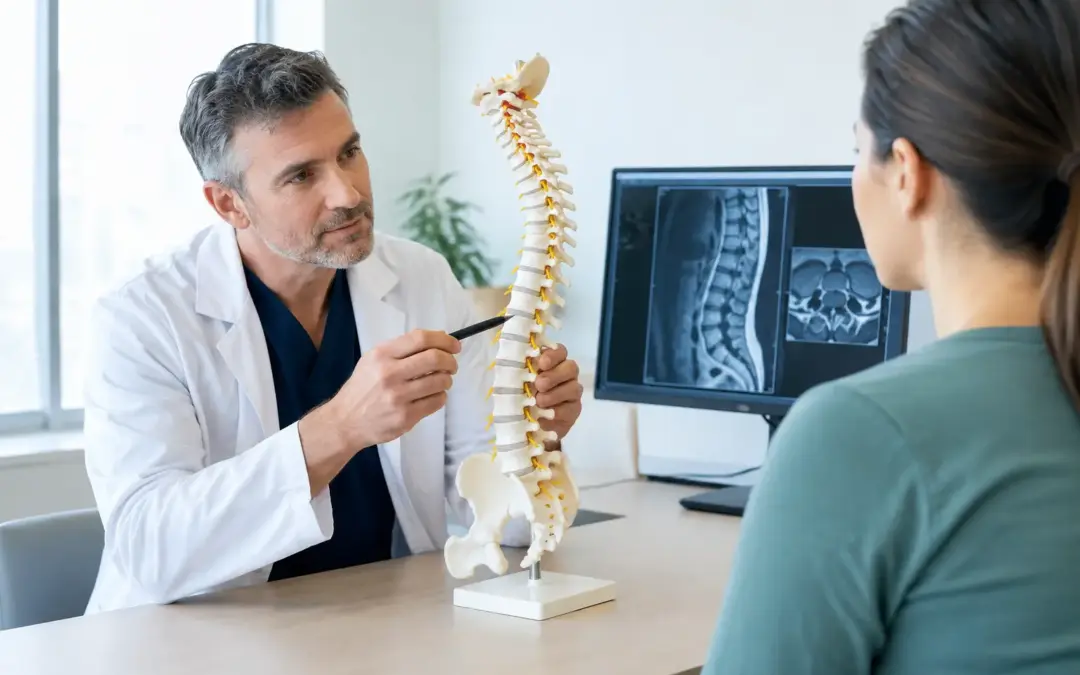
A diagnosis of disc degeneration does not automatically mean you need a fusion. Yet many patients who ask, who needs fusion, have already spent months or years managing neck or back pain, reduced mobility, numbness, or weakness that is affecting work and independence. The right answer comes down to one central question: is the spine stable enough to protect the nerves and function well without permanently joining two or more vertebrae?
Spinal fusion can be an excellent, life-changing procedure when it is medically appropriate. It is designed to stabilize a painful or unstable part of the spine by encouraging two bones to heal together. But fusion is not the only surgical path. For some patients, decompression, artificial disc replacement, or another motion-preserving stabilization procedure may better address the problem while maintaining movement.
Who Needs Fusion? Understanding the Medical Reasons
Fusion is generally considered when a segment of the spine has lost stability, when deformity is progressing, or when removing pressure from nerves would leave the area too unstable on its own. The goal is not simply to treat an image on an MRI. It is to relieve symptoms, protect neurological function, and create a stable foundation for daily activity.
A patient may be a candidate for fusion when vertebrae are slipping out of their normal position, a condition called spondylolisthesis. This can narrow the space around spinal nerves and cause leg pain, numbness, weakness, or difficulty standing and walking. If the slip is unstable or likely to worsen, fusion may help prevent further movement at that level.
Fusion can also be appropriate after significant disc collapse, particularly when the loss of disc height causes nerve compression and the joint is no longer functioning reliably. In the neck, severe degeneration may lead to arm pain, hand numbness, loss of dexterity, or signs of spinal cord compression. In the lower back, patients may experience sciatica, pain with standing, or a sense that their back cannot tolerate normal activity.
Some patients need fusion because of spinal deformity, such as scoliosis or kyphosis, especially when the curve contributes to imbalance, nerve compression, or disabling pain. It can also be recommended after a fracture, infection, tumor removal, or a previous surgery that did not heal as intended. These are highly individual situations, which is why a procedure recommendation should be based on a full clinical evaluation rather than a single scan.
Instability matters more than pain alone
Back or neck pain can be severe without requiring fusion. Muscle strain, facet joint irritation, a contained disc problem, and some forms of nerve compression may improve with nonsurgical care or a less extensive procedure. Pain is real, but pain by itself does not reveal whether a spinal segment is unstable.
Surgeons look for evidence such as abnormal movement on flexion-extension X-rays, loss of alignment, vertebral slippage, collapsed disc space, or instability expected after decompression. They also consider whether the symptoms match the findings. A good surgical plan connects the patient’s pain pattern, neurological exam, imaging, and functional limitations.
When Fusion May Not Be the First Choice
For the right candidate, preserving motion can be an important advantage. Cervical artificial disc replacement, for example, may be considered when a damaged disc is causing nerve or spinal cord compression but the surrounding joints remain healthy and the spine is stable. Rather than fusing the level, the surgeon removes the problem disc and places an artificial disc designed to allow continued movement.
This option is not suitable for everyone. Advanced facet arthritis, significant instability, osteoporosis, major deformity, infection, or certain prior surgeries can make fusion the safer choice. The same is true when more than one part of the spine is severely diseased. Motion preservation is valuable when it is clinically sound, not when it compromises stability.
In the lumbar spine, some patients may benefit from decompression alone if a herniated disc or spinal stenosis is compressing a nerve but the vertebrae remain stable. Others may be candidates for minimally invasive stabilization approaches. The distinction can be critical. A decompression can relieve nerve pressure, while a fusion may be needed if removing bone or tissue would otherwise allow the spine to shift.
The conversation should never be framed as fusion versus a better procedure. Fusion is sometimes the most reliable way to restore stability. The better question is which procedure addresses your specific anatomy with the least unnecessary loss of motion.
How a Spine Surgeon Decides Whether Fusion Is Appropriate
A careful evaluation usually begins with your symptoms and daily limitations. Pain that travels into an arm or leg, worsening weakness, balance changes, hand clumsiness, numbness, and loss of walking tolerance all provide meaningful clues. Your surgeon will want to know what treatments you have tried, how long symptoms have lasted, and whether they are improving or progressing.
Imaging is equally important, but each study answers a different question. MRI scans show discs, nerves, the spinal cord, and soft tissues. CT scans offer a more detailed view of bone and can be useful after prior surgery. Standing X-rays show alignment under body weight, while bending X-rays can reveal abnormal movement that may not appear on an MRI taken while lying down.
Bone quality, smoking status, diabetes control, body weight, medication use, and previous procedures also affect planning. Fusion depends on bone healing, so these factors are not minor details. A surgeon may recommend steps to improve the chance of a successful fusion before surgery, such as stopping nicotine use or addressing low bone density.
Cervical fusion and lumbar fusion are different decisions
Cervical fusion is often used to treat disc disease, instability, or spinal cord compression in the neck. Many patients are concerned about losing motion, particularly if more than one level is involved. In reality, the amount of noticeable movement lost depends on the levels treated and the condition of the rest of the neck. For selected patients, cervical disc replacement may offer a motion-preserving alternative.
Lumbar fusion is commonly considered for instability, recurrent disc problems with collapse, spondylolisthesis, or deformity. Because the lower back carries substantial load, the decision requires careful attention to mechanics and alignment. A fusion can reduce painful movement at a damaged level, but it also changes how forces are distributed to nearby segments. That trade-off should be discussed plainly before treatment.
Questions to Ask Before Agreeing to Fusion
Before deciding on surgery, ask your surgeon to explain the reason fusion is recommended in language you can understand. These questions can help you have a more productive conversation:
- What specific finding shows that my spine is unstable or likely to become unstable?
- Is decompression alone a reasonable option, and why or why not?
- Could I qualify for artificial disc replacement or another motion-preserving procedure?
- How many levels need treatment, and what movement might I realistically lose?
- What is the expected recovery timeline, including restrictions, rehabilitation, and return to travel or work?
You should also ask what could happen if you delay treatment. Not every spinal condition requires urgent surgery, but progressive weakness, spinal cord compression, loss of coordination, or bowel and bladder changes require prompt medical evaluation. A trustworthy surgical team will explain both the benefits of treatment and the risks of waiting.
Planning Spine Surgery With Confidence
For patients traveling from the United States or Canada, the decision involves more than choosing a procedure. You need confidence in the surgeon, hospital standards, travel plan, and postoperative support. International treatment should not mean managing complex logistics alone while recovering from major surgery.
Spinal Surgery Mexico coordinates specialist-led care with Dr. Mario Salmon, a board-certified neurosurgeon, while helping patients understand their treatment options, arrange travel details, and recover with supervised support in San Miguel de Allende. That structure can be especially valuable for self-pay patients seeking advanced care without the financial pressure or extended waits they may face at home.
The best next step is not to assume you need fusion or to rule it out based on fear of stiffness. Gather your records, seek a thorough specialist review, and ask for a recommendation built around your symptoms, stability, and goals for life after treatment. The right plan should help you move forward with greater safety, comfort, and confidence.