
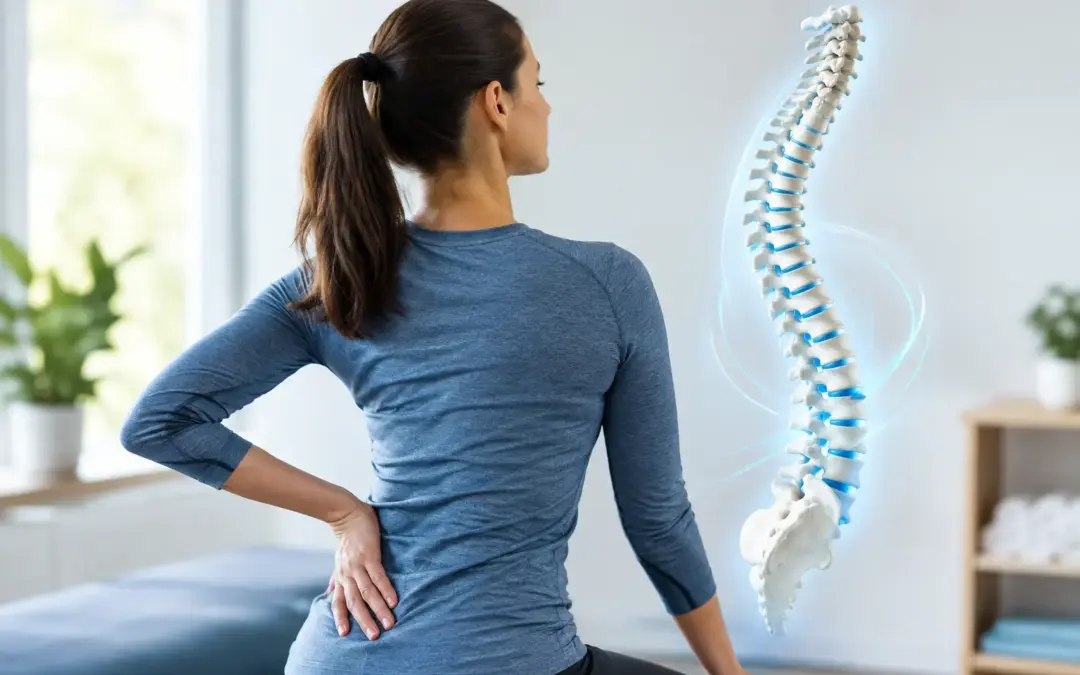
A painful spinal disc can make ordinary movements feel calculated: turning your head while driving, looking down at a phone, standing long enough to prepare dinner, or walking through an airport. When conservative care no longer controls symptoms, motion preservation may offer an alternative to permanently joining spinal bones with a fusion. For the right patient, the goal is straightforward: treat the damaged disc or nerve compression while retaining as much natural movement as possible.
That goal matters, but it is not a promise that every painful spine can or should be treated without fusion. The best procedure depends on your anatomy, the source of your symptoms, the condition of nearby joints, and the stability of your spine. A careful evaluation is what turns motion-preserving surgery from an appealing idea into a safe, personalized treatment plan.
What Motion Preservation Means in Spine Surgery
Motion preservation refers to surgical approaches designed to maintain controlled movement at a treated spinal level. Rather than permanently immobilizing that segment, the surgeon removes the source of nerve pressure or disc-related pain and uses a device or stabilization strategy intended to allow continued motion.
In the cervical spine, the most recognized option is artificial disc replacement. During this procedure, a damaged disc is removed, the spinal cord and nerves are decompressed when necessary, and an artificial disc implant is placed between the vertebrae. The implant is designed to support the space between the bones while allowing the neck to bend, rotate, and move in a more natural pattern than a fused segment.
In the lumbar spine, motion-preserving care can be more complex. Some patients may be candidates for decompression without fusion, dynamic stabilization, or other fusion-alternative strategies. These procedures may address nerve compression and support an unstable area without rigidly eliminating all movement. However, lumbar motion preservation is not a single procedure and is not appropriate for every form of back pain or instability.
The objective is not simply to preserve motion on an X-ray. It is to relieve the symptoms caused by compression or disc failure while supporting function, mobility, and a return to daily activities when the clinical situation allows.
Why Preserving Spinal Motion Can Matter
A healthy spine is built to distribute movement across multiple levels. When one level is fused, the fusion can be highly effective at creating stability, but that level no longer moves. The segments above and below it must continue to handle the demands of bending, turning, lifting, and everyday posture.
For some patients, retaining movement at the treated level may help maintain more natural mechanics. Cervical artificial disc replacement may also reduce stress placed on adjacent levels compared with fusion in appropriately selected patients. This potential advantage is one reason many active adults ask about disc replacement after learning they need neck surgery.
There are practical benefits as well. Patients often value the possibility of maintaining neck mobility for driving, work, exercise, travel, and independent living. Yet surgery should never be chosen based on lifestyle goals alone. An implant must match the patient’s anatomy, and the spine must be stable enough for a motion-preserving approach to be safe.
Motion preservation is not the same as avoiding surgery
Patients sometimes hear “non-fusion” and assume the procedure is less significant. In reality, artificial disc replacement and other stabilization procedures are major spine operations that require precise imaging review, skilled surgical technique, and a structured recovery plan.
The surgeon still needs to remove pressure from delicate nerves or the spinal cord, position an implant accurately, and account for bone quality, alignment, facet joints, and surrounding degeneration. Preserving movement is a technical goal, not a shortcut.
Cervical Disc Replacement Versus Fusion
Cervical disc replacement and anterior cervical discectomy and fusion, often called ACDF, share important steps. Both can remove a diseased disc and decompress nerves that cause radiating arm pain, numbness, weakness, or spinal cord symptoms. The difference comes after the damaged disc is removed.
With ACDF, the surgeon places a spacer or bone graft and stabilizes the level so the two vertebrae heal together. Fusion is a proven solution, particularly when there is marked instability, severe degeneration, deformity, or other factors that make an artificial disc unsuitable.
With cervical disc replacement, an artificial disc is inserted instead of creating a fusion. The implant is intended to maintain disc height and permit motion. Recovery expectations vary, but many suitable candidates appreciate that the procedure is designed around both decompression and movement.
Neither option is automatically better. A fusion may be the safer and more durable choice when the facet joints are significantly arthritic, the spine is unstable, bone quality is poor, or the disc space has collapsed beyond what an implant can reliably address. A surgeon who recommends fusion when it is clinically indicated is protecting the same outcome patients want: dependable relief and a stable spine.
Who May Be a Candidate for Motion Preservation?
Candidates commonly have symptoms tied to one or more damaged discs, such as persistent neck pain with arm pain, tingling, numbness, or weakness. Imaging may show disc herniation or degeneration causing nerve root or spinal cord compression. Candidates for cervical artificial disc replacement generally need preserved motion at the affected level and no major contraindications involving alignment, instability, advanced facet disease, or bone health.
Age alone does not decide candidacy. A healthy older adult with favorable imaging may be a better candidate than a younger person with severe arthritis or structural instability. Likewise, a patient with intense symptoms may still need more conservative treatment first if imaging does not clearly identify a surgically correctable cause.
A proper assessment typically includes MRI imaging, X-rays that evaluate alignment and movement, medical history, medication review, and a detailed discussion of symptoms. If you have already been told you need a fusion, obtaining a specialist review can clarify whether a motion-preserving option is reasonable for your specific diagnosis.
When Fusion Remains the Better Choice
Fusion should not be presented as a failure of modern spine care. It remains one of the most established and effective treatments for many spinal conditions. The priority is always to address nerve compression and provide lasting structural support, not to preserve motion at any cost.
Fusion may be favored when there is substantial vertebral instability, significant deformity, advanced arthritis in the facet joints, fracture, infection, tumor, severe osteoporosis, or multiple levels of complex degeneration. In some cases, the anatomy can no longer support an artificial disc safely. In others, the pain source lies beyond the disc itself.
Patients also need realistic expectations. No implant can restore a spine to the condition it was in before injury or degeneration. Even after technically successful surgery, rehabilitation, activity modification, and time are part of recovery. The right procedure is the one that offers the most appropriate balance of decompression, stability, and long-term function.
Planning Surgery Beyond the Operating Room
For patients traveling from the United States or Canada, confidence in the clinical plan must be matched by confidence in the care process. International spine surgery requires more than choosing a procedure. You need clear communication with your surgeon, transparent review of the recommended treatment, a vetted hospital setting, and a recovery plan that does not leave you managing early postoperative needs alone.
At Spinal Surgery Mexico, patients considering cervical artificial disc replacement, decompression, fusion alternatives, or stabilization receive coordinated support around the surgical decision. Board-certified neurosurgeon Dr. Mario Salmon reviews whether a motion-preserving procedure is appropriate, while English-speaking coordination helps patients prepare records, understand travel needs, and plan supervised recovery in San Miguel de Allende.
Cost is understandably part of the decision, especially for self-pay patients facing limited coverage or long wait times at home. Affordable access should never mean accepting vague answers about implant selection, surgeon qualifications, hospital standards, or recovery monitoring. Ask what is included in the surgical plan, what follow-up is provided, and how unexpected needs are handled after surgery.
Questions Worth Asking at Your Consultation
Before choosing motion preservation, ask your surgeon what is causing your symptoms and whether the findings on imaging match what you feel. Ask whether your facet joints, spinal alignment, and bone quality support an artificial disc or other non-fusion option. It is also reasonable to ask why fusion is being recommended if it is the proposed procedure, and what trade-offs exist with each approach.
You should understand the expected recovery timeline, activity restrictions, medication plan, and warning signs that require prompt medical attention. If you are traveling for care, discuss when it is safe to fly, where you will recover, and who will be available if you need help after discharge.
The most helpful next step is not choosing a procedure name from a website. It is obtaining a thorough spine review that explains your options in plain language, respects your goals for movement and independence, and gives you a clear path forward.