
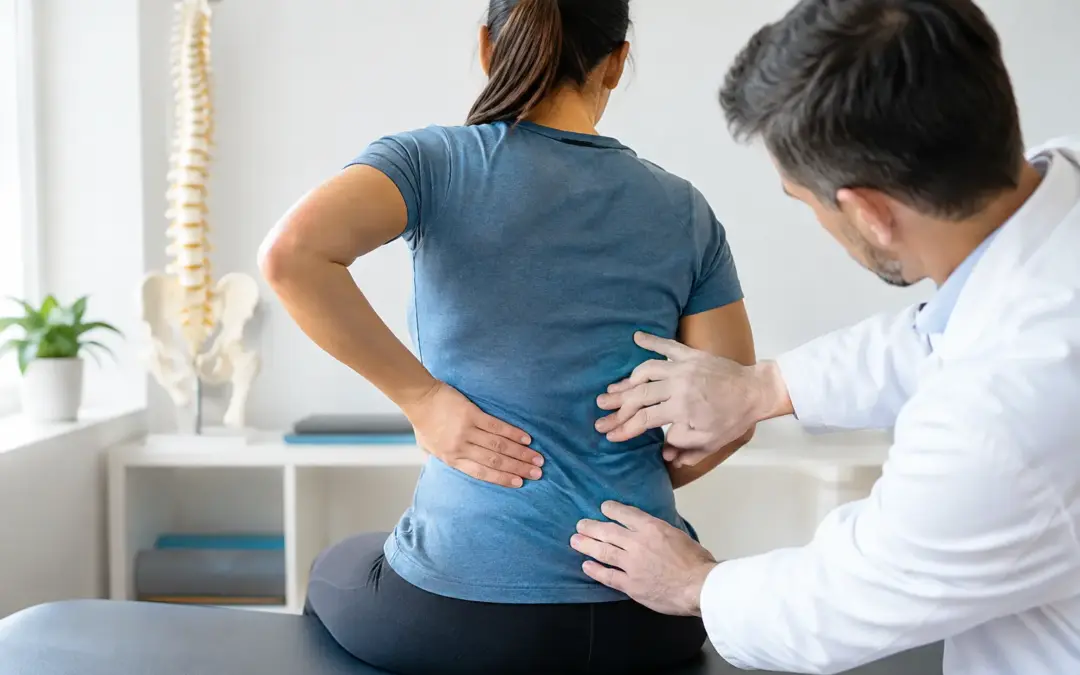
A slip in one spinal vertebra can sound alarming, but spondylolisthesis is not a one-size-fits-all diagnosis. The best treatments for spondylolisthesis depend on what is causing the slip, how far it has progressed, whether nerves are compressed, and how much pain or weakness is affecting your life. For some people, focused nonsurgical care is enough. For others, surgery may be the clearest path to stable movement and lasting nerve relief.
The decision should never be based on an X-ray alone. A skilled spine specialist considers your symptoms, MRI or CT findings, spinal alignment, bone health, activity goals, and response to prior treatment. That full picture matters, especially when you are weighing surgery at home or exploring care abroad.
What Spondylolisthesis Does to the Spine
Spondylolisthesis occurs when one vertebra moves forward relative to the bone beneath it. It is most common in the lower back, particularly at L4-L5 or L5-S1. The condition may develop from age-related disc and joint wear, a stress fracture, congenital anatomy, trauma, or prior spine surgery.
A mild slip can cause little or no discomfort. A more significant slip may narrow the space available for spinal nerves, creating low back pain, sciatica, numbness, tingling, leg weakness, or pain that worsens with standing and walking. Some patients also notice hamstring tightness, changes in posture, or reduced confidence with daily movement.
The central clinical question is not simply, “Is there a slip?” It is whether that slip is unstable or pressing on nerves enough to limit your function or place your neurologic health at risk.
Best Treatments for Spondylolisthesis: Start With the Cause
Activity modification, medication, and targeted physical therapy
When symptoms are mild and there is no progressive weakness or dangerous nerve compression, conservative care is often the appropriate first step. Temporarily avoiding repeated bending, heavy lifting, high-impact activity, and painful extension movements can calm an irritated segment.
Physical therapy should be specific, not generic. The goal is usually to strengthen the deep abdominal, hip, and spinal-support muscles while improving flexibility and movement mechanics. A therapist may also help you learn ways to sit, lift, walk, and exercise without repeatedly loading the painful level.
Anti-inflammatory medication or other pain medication may provide short-term relief when medically appropriate. These treatments can make it easier to stay active and participate in rehabilitation, but they do not correct structural instability. If pain repeatedly returns as soon as medication stops, a more complete evaluation is warranted.
Injections for diagnostic clarity and temporary relief
Epidural steroid injections or selective nerve root blocks may help when inflammation around a compressed nerve is driving leg pain. Facet joint injections can sometimes clarify whether arthritic joints are contributing to low back pain.
Injections are not a cure for a vertebral slip, and results vary. Their value is often in reducing inflammation long enough for rehabilitation to work or in helping the surgeon identify the pain generator before recommending a procedure. For a patient with worsening weakness, severe instability, or progressive neurologic symptoms, injections should not delay needed treatment.
Bracing in selected cases
A brace may be used for a short period in certain cases, particularly after an acute stress injury or when movement causes severe pain. It can reduce strain while tissues settle, but long-term bracing can weaken supporting muscles if it replaces active rehabilitation. For adults with degenerative spondylolisthesis, bracing is generally a limited supportive measure rather than a definitive solution.
When Surgery Becomes the Better Option
Surgery may be recommended when well-directed conservative treatment has not restored an acceptable quality of life, or when imaging and symptoms show meaningful nerve compression or instability. Red-flag symptoms require prompt medical attention: new bowel or bladder changes, numbness in the groin or saddle area, rapidly worsening leg weakness, or major difficulty walking.
For many patients, the surgical objective has two parts: decompress the nerves and stabilize the spine. The right balance depends on how much bone must be removed to free the nerves and whether the spinal segment remains stable afterward.
Decompression surgery
A decompression procedure removes the tissue or bone crowding the nerves. Depending on the anatomy, this may involve a laminectomy, laminotomy, foraminotomy, or removal of a disc fragment. It can be highly effective for leg pain, numbness, and walking intolerance caused by nerve pressure.
Decompression alone may be suitable when the slip is low-grade and stable, particularly if the procedure can preserve enough of the supporting joints and ligaments. However, removing too much stabilizing structure in an already unstable segment can worsen the slip. That is why the decision between decompression alone and decompression with stabilization requires careful imaging review and surgical judgment.
Minimally invasive stabilization and fusion
When the segment is unstable, stabilization is commonly paired with decompression. This often involves pedicle screws, rods, and an interbody implant placed between vertebrae to restore disc height and encourage fusion. A fusion permanently joins the affected bones so they no longer move painfully against one another.
Fusion can offer reliable stability and may improve alignment while relieving nerve compression. The trade-off is that the fused level no longer moves, recovery requires time for bone healing, and adjacent spinal levels may experience greater stress over the years. These concerns do not make fusion the wrong choice. For substantial instability, it can be the safest and most durable option.
Minimally invasive approaches use smaller incisions and muscle-sparing techniques when anatomy allows. Potential benefits include less soft-tissue disruption, reduced blood loss, and a more manageable early recovery. “Minimally invasive” does not mean minor surgery, however. The complexity of the nerve compression, degree of slip, bone quality, and number of levels involved still matter.
Motion-preserving options: appropriate only for select patients
Patients often ask whether they can avoid fusion. In certain lumbar conditions, carefully selected stabilization strategies or motion-preserving technologies may be considered. These options are not appropriate for every case of spondylolisthesis, particularly when there is substantial instability, advanced facet joint degeneration, deformity, or a high-grade slip.
A trustworthy surgical consultation should explain why a motion-preserving option is or is not suitable for your anatomy. The best procedure is not necessarily the newest one or the least invasive one. It is the procedure that addresses the actual source of pain and protects the nerves while supporting long-term function.
How to Compare Your Surgical Options
Before consenting to surgery, ask your surgeon to explain the degree of slip, whether it moves on flexion-extension X-rays, which nerve roots are affected, and what could happen if treatment is delayed. You should also understand whether the plan is decompression alone, stabilization, fusion, or a combination – and why.
For international patients, quality of coordination is part of treatment quality. You need a clear review of imaging before travel, transparent expectations about the procedure and hospital stay, a plan for pain control and mobility after discharge, and support through the early recovery period. At Spinal Surgery Mexico, this means surgeon-led evaluation alongside English-speaking coordination, hospital planning, travel guidance, and supervised postoperative recovery designed for patients who do not want to navigate major spine care alone.
Cost should be transparent, but it should not be the only comparison point. Confirm surgeon credentials, hospital standards, implant quality, anesthesia planning, infection-prevention practices, follow-up access, and what support is available if your recovery takes longer than expected. A lower price is meaningful only when it is paired with a clear standard of care.
Recovery Is Part of the Treatment
Recovery after nonsurgical care or surgery is an active process. Walking is often encouraged early after surgery, with restrictions on bending, lifting, and twisting while tissues heal. Physical therapy may begin with gentle mobility and progress toward core strength, balance, endurance, and safe return to normal activities.
Nerve recovery can be uneven. Leg pain may improve quickly after decompression, while numbness or weakness that has been present for months can take longer to resolve and may not disappear completely. Patients with diabetes, smoking history, osteoporosis, or multiple spinal levels involved may require additional planning and a slower recovery timeline.
The most encouraging next step is a careful evaluation by an experienced spine surgeon. When treatment is matched to the true source of instability and nerve pressure, many people can move beyond simply managing pain and begin planning for a more active, independent life again.